
Project archive guide. Technical instructions are awaiting hardware-team review; consult the documentation for your exact equipment.
Video Transmitter (VTX)
Propellers are the driving force behind an FPV drone’s lift and movement, converting motor torque into thrust. Their size, pitch, shape, and material directly affect flight performance, speed, efficiency, and maneuverability. Choosing the right propeller is crucial for balancing power draw, flight time, and handling characteristics, making them one of the most important components to tune for your specific flying style and build.
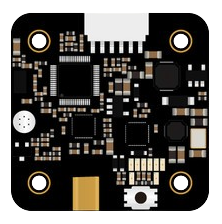
Key Information to Know
Output Power
The strength of the VTX signal, measured in milliwatts (mW). Higher power extends range but increases heat and battery drain.
Frequency Band
The radio frequency range your VTX uses to transmit video, most commonly 5.8GHz for FPV drones.
Channels
Specific frequencies within a band used to prevent interference between multiple pilots.
Analog vs. Digital
Two main VTX types — analog for low latency and lightweight setups, digital for HD video quality.
Antenna Connector
The type of plug the VTX uses to connect an antenna, such as SMA, RP-SMA, or MMCX.
Heat Management
Preventing overheating through good airflow, especially at high power levels.
Output Power
Measured in milliwatts (mW), this defines how far your FPV video signal can travel. Lower settings like 25mW are ideal for racing to avoid interfering with other pilots. Higher outputs such as 200mW–1000mW extend range but draw more power and produce more heat.
Frequency Band
Most FPV VTXs operate on the 5.8GHz band, balancing range, penetration, and image clarity. Some systems use 2.4GHz or 1.2GHz for long-range flights, but these require larger antennas and may be restricted in certain regions.
Channels
Channels are specific frequencies within a band that allow multiple pilots to fly without video interference. Many modern VTXs feature SmartAudio or IRC Tramp, letting you change channels directly through your OSD or radio without touching the drone.
Analog vs. Digital
Analog VTXs are lighter, cheaper, and have near-zero latency, making them popular for racing and freestyle. Digital VTXs like DJI O3 and HDZero offer HD video and better image clarity but usually at higher cost, weight, and slightly increased latency.
Antenna Connector
Common connector types include SMA, RP-SMA, and MMCX. Matching the correct connector type and polarization with your antenna is essential for signal quality and range.
Heat Management
High-power VTXs can overheat quickly if left running without airflow. Mounting your VTX where air passes over it and avoiding prolonged idle operation helps prevent thermal shutdown or permanent damage.
Extra Helpful Information
Frequency Bands
The radio frequency range your VTX operates on, usually 5.8GHz for FPV drones.
Channels
Specific frequency slots within a band to avoid interference with other pilots.
Output Power
Measured in mW; higher power increases range but consumes more battery and generates more heat.
Legal Transmission Limits
Local laws regulate maximum VTX power; many regions limit to 25mW without a license.
Pit Mode
A very low-power mode that prevents interference when multiple pilots are working nearby.
Smart Control Protocols
Systems like SmartAudio or IRC Tramp allow changing VTX settings through your OSD or radio.
Modulation Standards
Video formats like NTSC or PAL affect field of view, frame rate, and compatibility.
Durability & Mounting
Case design, cooling, and location affect VTX lifespan and crash resistance.
Latency
The delay between camera capture and display; important for racing and freestyle control.
Frequency Bands
FPV drones most commonly use the 5.8GHz frequency band for video transmission. This frequency provides a good balance of compact antenna size, low interference from common devices, and adequate range for most freestyle and racing flights. Lower frequencies like 2.4GHz or 1.2GHz can penetrate obstacles better and travel farther, but they require larger antennas, can be more susceptible to radio control interference, and may need special licensing in some regions.
Channels
Channels are subdivisions within a frequency band that allow multiple pilots to fly in the same area without interfering with each other’s video feed. Analog VTXs often have 40 or 48 channels, while digital systems usually have fewer but more stable channels. Selecting a channel that’s far from others in use reduces the risk of ghosting, static, or complete video loss during flight.
Output Power
Output power, measured in milliwatts (mW), determines the signal strength and directly affects your range and penetration through obstacles. Common VTX power levels are 25mW, 200mW, 400mW, and 800mW+, with higher power improving range but creating more electrical noise, heat, and battery drain. For racing or indoor flying, low power minimizes interference; for long-range exploration, higher power is often necessary.
Legal Transmission Limits
Radio transmission is regulated in most countries to prevent interference with licensed services. In the EU, 25mW on 5.8GHz is typically the legal maximum for license-free operation, while other regions allow higher limits. Flying over the limit without authorization can lead to fines, confiscated equipment, or legal trouble. Always check and follow your local regulations before adjusting power levels.
Pit Mode
Pit Mode drastically reduces your VTX’s power output—often below 1mW—allowing you to power on and configure your quad without disrupting other pilots on the same frequency band. This is especially useful at group events or races where even a short burst of high-power signal could cause another pilot to lose video mid-flight.
Smart Control Protocols
Protocols like SmartAudio and IRC Tramp let you change your VTX’s channel, band, and power settings via your flight controller’s on-screen display (OSD) or your radio transmitter menu. This removes the need to physically press buttons on the VTX, which can be awkward or impossible once the drone is fully assembled. It also allows for quick mid-flight adjustments during events or practice sessions.
Modulation Standards
Analog VTX systems transmit in video formats such as NTSC (60Hz refresh, slightly higher frame rate) or PAL (50Hz refresh, slightly taller image). The choice affects how much vertical space you see in your goggles and can influence motion smoothness. Digital systems handle image formatting automatically but may have adjustable resolution and frame rate settings that impact latency and clarity.
Durability & Mounting
VTX boards generate heat during operation, and without adequate cooling, performance can drop or the unit can shut down to prevent damage. Proper mounting with airflow—often near the rear of the frame—is critical for both signal quality and thermal management. A protective case or heat sink can help shield the VTX from crash damage while extending its lifespan.
Latency
Latency is the time delay between the camera capturing an image and that image appearing in your goggles. Analog VTXs usually have extremely low latency (1–10ms), making them ideal for racing where split-second reactions matter. Digital systems like DJI or HDZero often have slightly higher latency (20–40ms) but provide superior clarity and detail, which benefits freestyle flying and cinematic work.